
Rising Damp Treatment
Rising damp is one of the most damaging — and most misdiagnosed — problems in UK properties. If it's been painted over or re-plastered without treating the cause, it will come back. We fix it properly.
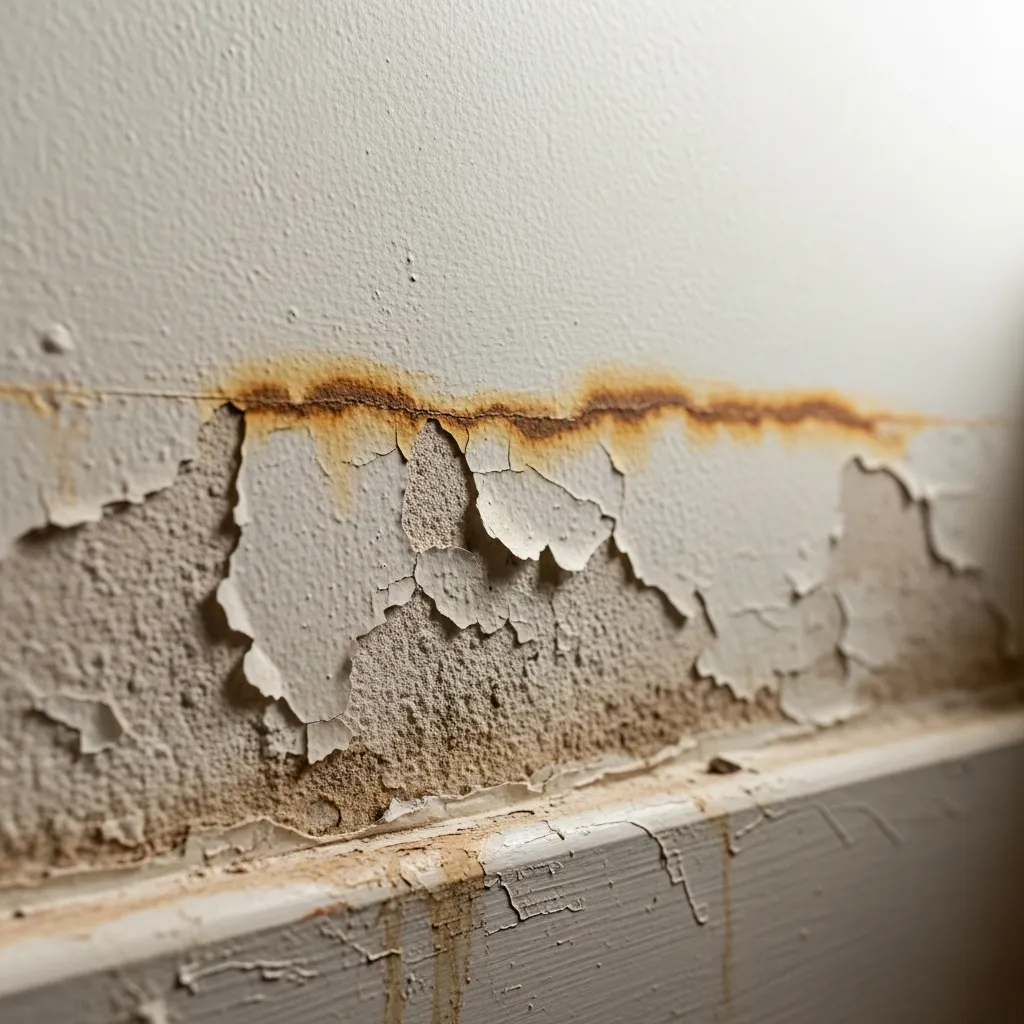
What Is Rising Damp?
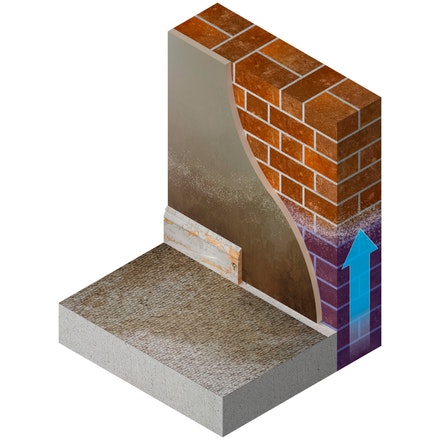
Rising damp occurs when moisture from the ground travels upwards through the brickwork and mortar of your walls by capillary action. Every property is built with a damp proof course (DPC) — a physical or chemical barrier that stops this from happening. When the DPC fails, is bridged, or was never properly installed, moisture rises freely.
Older properties in Colchester — Victorian terraces, Edwardian semis, 1930s houses — often have original slate or bitumen DPCs that have deteriorated over decades. Modern cavity walls can also suffer if debris bridges the cavity or the outer leaf becomes saturated.
Signs You Have Rising Damp
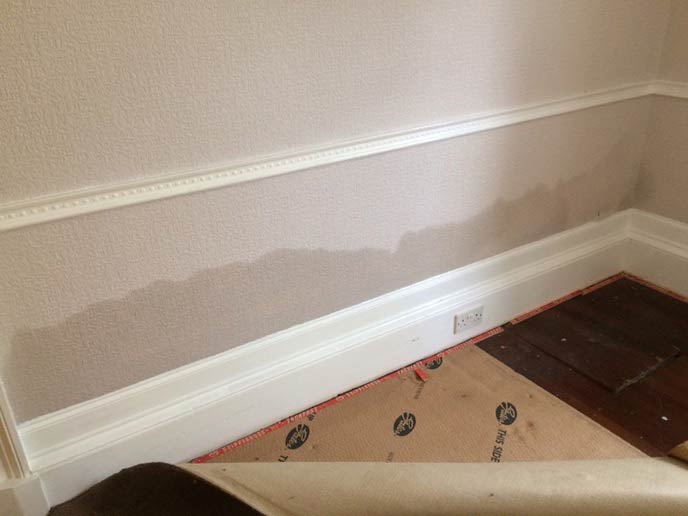
- Tide marks or staining on walls up to 1 metre high
- Peeling or bubbling wallpaper, particularly near the skirting boards
- Salts appearing on the surface of plaster or brickwork
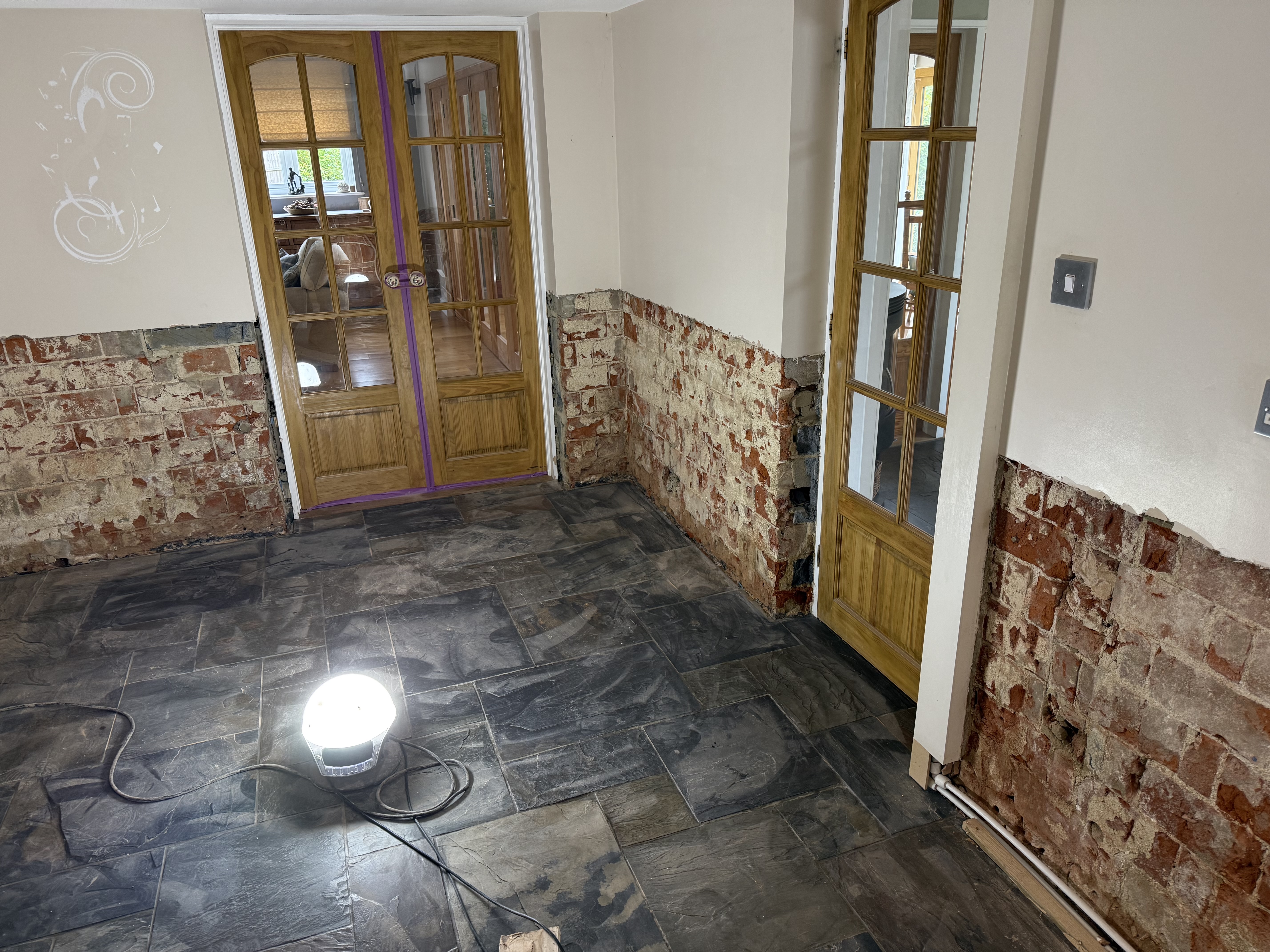
- Plaster that is soft, crumbling, or blowing away from the wall
- A persistent damp or musty smell in ground floor rooms
- Black mould forming at low level near the floor
- Skirting boards rotting or lifting away from the wall
How We Fix It
1Free Survey & Moisture Assessment
We visit your property and use professional moisture metres to map the extent of the rising damp. We measure moisture levels across your walls and confirm the diagnosis before recommending any treatment.
2Installation of a New Damp Proof Course
We inject a specialist silane or siloxane cream into a row of drilled holes at mortar course level. The cream cures to form a water-repellent barrier that stops moisture rising through the wall.
3Removal of Salt-Contaminated Plaster
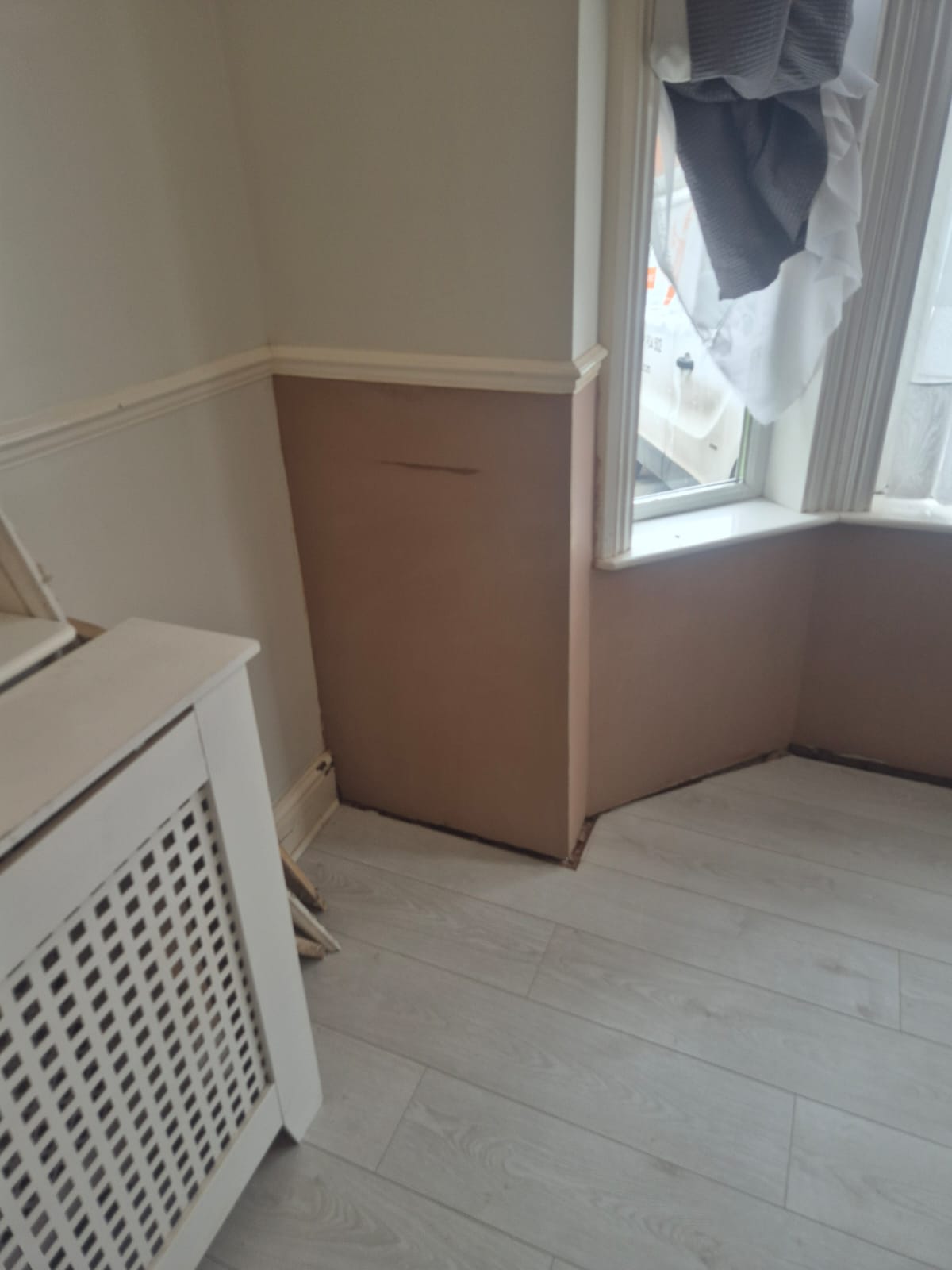
Rising damp deposits harmful salts into the plaster. We hack off all affected plaster — leaving the original on the wall is a common mistake that causes treatments to fail. We take it right back to the brick.
4Specialist Damp-Proof Replastering
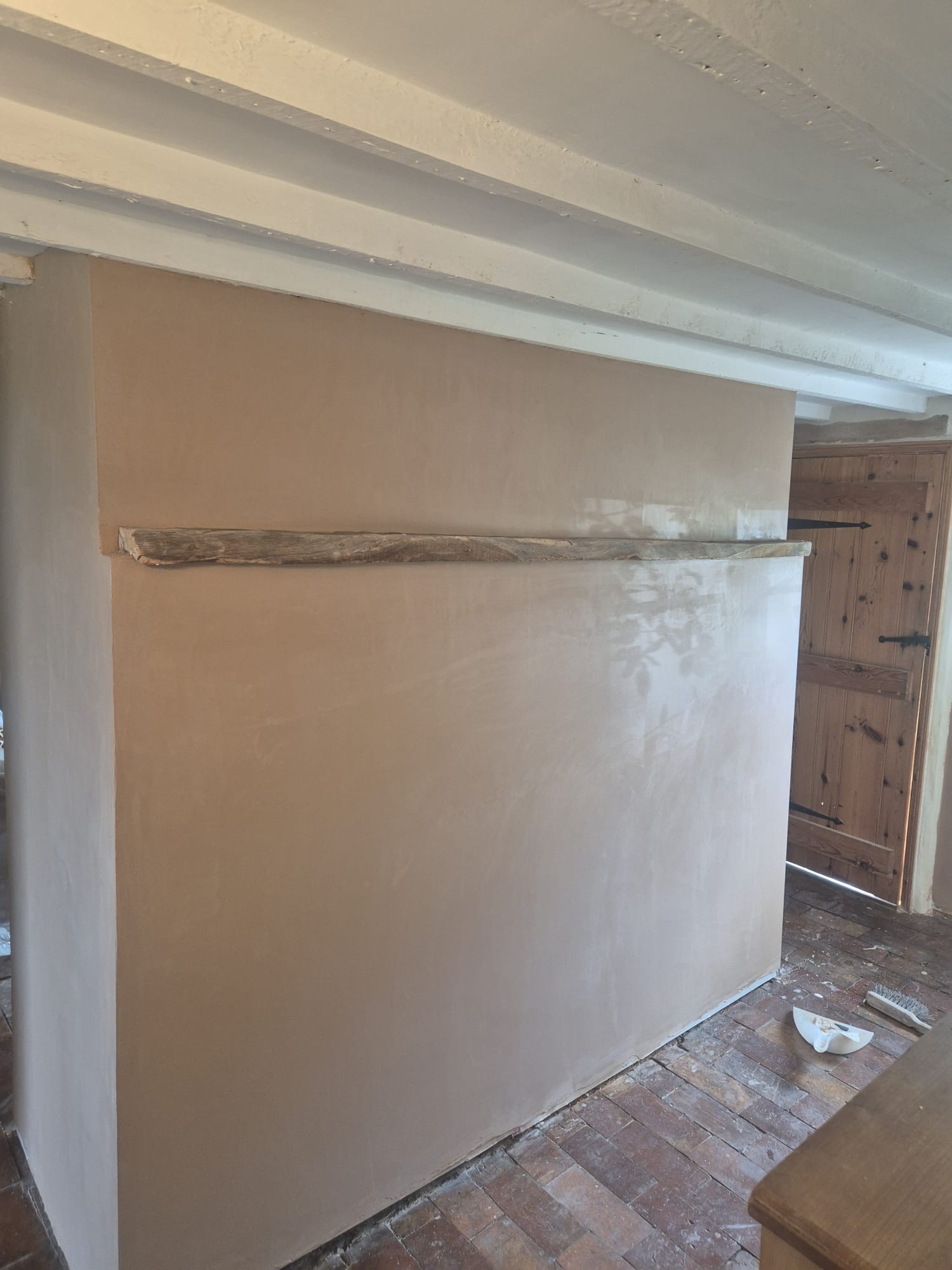
We apply a salt-retardant renovating plaster system specifically designed for use after rising damp treatment. This is not standard plaster — it resists the residual salts in the wall and gives a long-lasting finish.
Before & After
After Treatment
Completed Work
Benefits of Getting Rising Damp Treated
- Stop structural damage to your walls, floors, and timber joists
- Eliminate the musty smell and improve indoor air quality
- Remove black mould and protect your family's health
- Restore the appearance of your walls and decorations
- Protect and maintain the value of your property
- Long-term, guaranteed solution — not a temporary fix
Book a Free Survey
Worried about rising damp? We'll come to you, carry out a full assessment, and give you a straight answer — no pressure, no obligation.
Worried about rising damp in your home?
Call us today or fill in our contact form to arrange a free damp inspection. We cover Colchester, Ipswich, Clacton, Braintree, Chelmsford, and all surrounding areas.